The Fermi Paradox has a solution, and you’re going to like it.
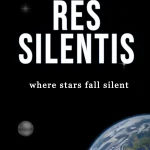
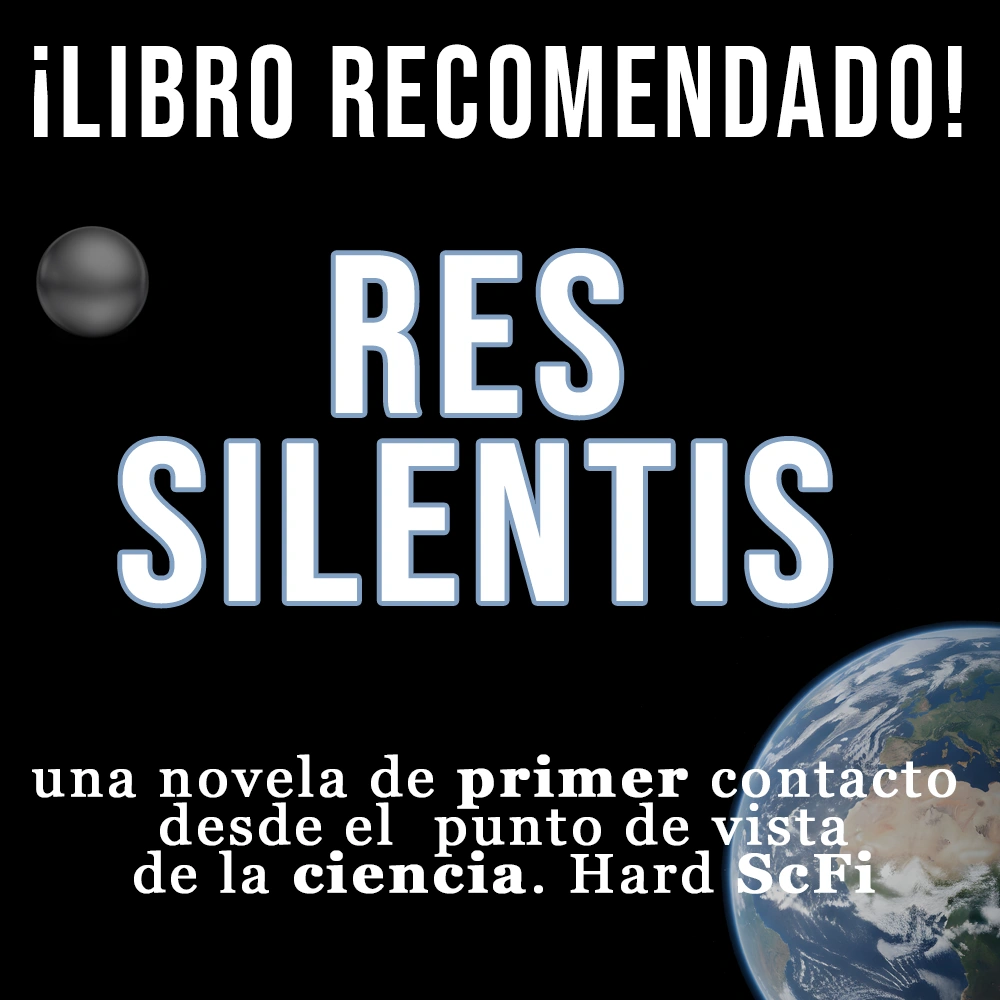
If you’ve been craving a science fiction story that treats its audience like adults—one that relies on astrophysics, mathematics, and human psychology rather than laser battles and bug-eyed aliens—you need to bump Eduardo Garbayo’s Res Silentis to the top of your reading list. This is a first contact story told from the perspective of hard science, not wishful thinking, and it carries the distinct DNA of a modern sci-fi classic.
The Ultimate Junkyard Discovery
The premise is brilliant in its grounded, gritty reality. High above Earth sits the «Graveyard Orbit». Located roughly 22,400 miles up, it’s the ultimate celestial landfill where humanity shoves its dead, multi-million-dollar satellites when their fuel runs dry. It’s a desolate zone meant only for the mechanical ghosts of our telecommunications era.
But during a routine cleanup mission, an autonomous European tug stumbles across an anomaly. It’s a flawless sphere. It emits no radio signals, boasts an impossible surface temperature matching the cosmic background, and absolutely defies orbital mechanics simply by hovering exactly where it shouldn’t be.
And here is where Res Silentis truly shines: the discovery doesn’t immediately spark an intergalactic war. Instead, it triggers a terrifying, beautiful crisis of understanding.
Science as the Universal Language
Garbayo clearly knows his stuff, blending his engineering background with a deep philosophical unease. The narrative dives deep into the technical and bureaucratic realities of space exploration, splitting the tension between the European Space Agency’s methodical curiosity and the American military’s pragmatic paranoia.
When humanity tries to decipher the silent sphere, they don’t rely on simple diplomacy. They are forced to use the very fabric of reality—like the Planck length—to bridge the gap. The book proposes a fascinating idea: the universe doesn’t care about our borders or our politics; it only respects the immutable laws of physics.
Here is why this book stands out in a crowded genre:
The pacing is intellectual: The suspense comes from decrypting data, overcoming the limitations of human technology, and the frantic collaboration of global scientists, rather than cheap action sequences.
The characters are authentic: From Dr. Helena J. Barzos’s stubborn scientific rigor to David Talends’s struggle with national duty and legacy, the cast feels like real professionals trying to solve an impossible, world-altering puzzle.
It holds a mirror to humanity: The Sphere doesn’t do anything, which is exactly what terrifies us the most. Its absolute, perfect silence forces Earth to confront its own noise, arrogance, and deep-seated fears.
A Love Letter to the Golden Age
Res Silentis is unapologetically a love letter to the golden era of science fiction. It channels the spirit of Jules Verne, Carl Sagan, and Arthur C. Clarke, reminding us why our ancestors first stepped out of the cave and looked up at the Milky Way.
Garbayo has crafted a narrative that is both technically rigorous and deeply emotional. It poses a chilling thought: standing at the threshold between the human and the infinite, the real question was never whether we were alone in the universe.
The real question was whether we were ready for the silence to end.